


Choose between a neckband and true wireless earbuds by thinking about what happens between listening sessions: where you put the earpieces, how you carry the charger, and how often you take calls. Neither design is automatically better for everyone. Fit and the features of the exact model matter more than the category name.
The practical difference
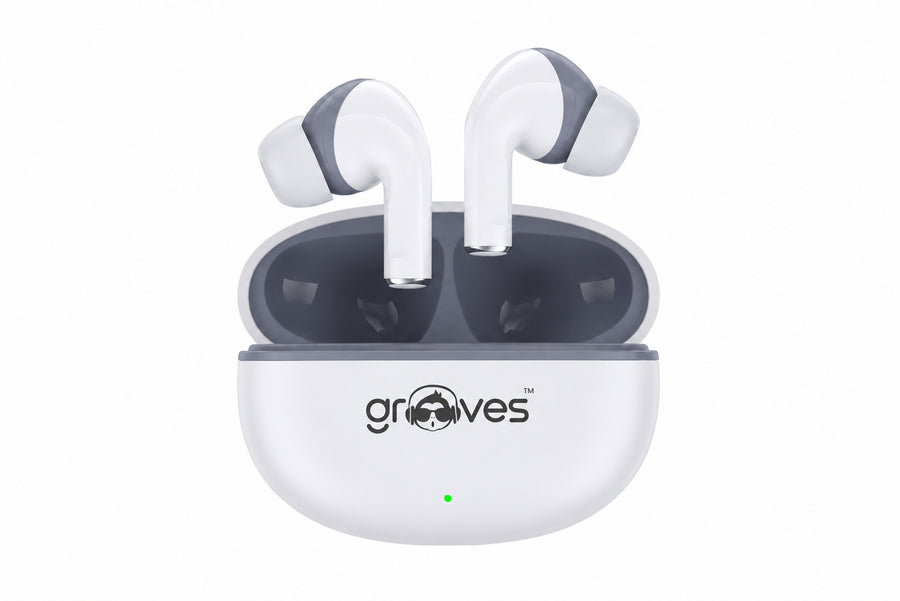
A neckband connects its two earpieces with a band or cable assembly. TWS, or true wireless stereo, earbuds have separate left and right earpieces, usually stored in a charging case. Both formats can connect wirelessly to a phone; a neckband's connecting wire does not mean it must plug into your phone.
Choose around your daily routine
You pause your music frequently
Picture a commute interrupted by conversations or short calls. With a neckband, the earpieces remain connected to the same assembly when removed. With TWS earbuds, decide where you will safely store each earpiece during a pause. Returning them to the case is a more deliberate habit than leaving them loose in a pocket. Do not assume automatic pause, magnetic attachment or automatic power-off unless your model documents it.
You want a compact item to carry
TWS earbuds use a small case as their storage and charging home. Check whether its size suits your bag or pocket. A neckband has a different shape and may be convenient for a person who prefers one connected accessory. Comfort is personal: consider the band against a collar as well as the earpieces in your ears.
Calls matter more than music features
Compare the microphone and calling information for the exact product. The neckband or TWS label alone does not establish call quality. Similarly, a noise-reduction claim for the microphone does not necessarily mean active noise cancellation for the listener. Our ANC and ENC guide explains the distinction before you choose.
Compare battery figures fairly
For TWS earbuds, separate listening time on one earpiece charge from total time including additional case charges. For a neckband, check the stated runtime and test conditions. Comparing a case-inclusive total against a single-charge figure is misleading. Volume, calling and enabled features can affect use time; do not transfer one model's battery claim to another.
A five-point checklist before ordering
- Fit: check the wearing style, included tips and any size information. Neither format guarantees a secure fit for every ear.
- Phone compatibility: confirm the connections and controls you need. Bluetooth connectivity does not guarantee every optional feature will work with every phone.
- Charging: check the input, connector and charging instructions. A compatible cable shape alone does not establish the correct charging setup.
- Exercise use: confirm the exact model's stated resistance rating. Do not assume the charging case has the same protection as the earpieces.
- Purchase details: open the selected variant for current price, stock, warranty and return terms before checkout.
Compare Grooves options
Browse the Grooves neckband collection if you prefer connected earpieces, or explore Grooves wireless earbuds if separate earpieces and a case suit your routine. Product availability and specifications vary; collection membership is not a promise of any particular feature.
If a detail is missing, contact Grooves support with the model name and your phone model. Ask the specific question that affects your choice, such as the charging input or a required control, rather than relying on a generic category claim.
Frequently asked questions
Do neckbands always last longer than TWS earbuds?
No category-wide battery promise is reliable. Compare the published figures for the two exact models using the same basis: single charge versus single charge, with stated conditions.
Are TWS earbuds always better for calls?
The format alone cannot answer that. Check model-specific microphone information and the features you actually need.
What should I choose if I keep misplacing an earpiece?
Consider whether connected earpieces would suit you better, or whether consistently returning TWS earbuds to their case solves the problem. This is a routine and storage choice rather than a guarantee that either product cannot be lost.